
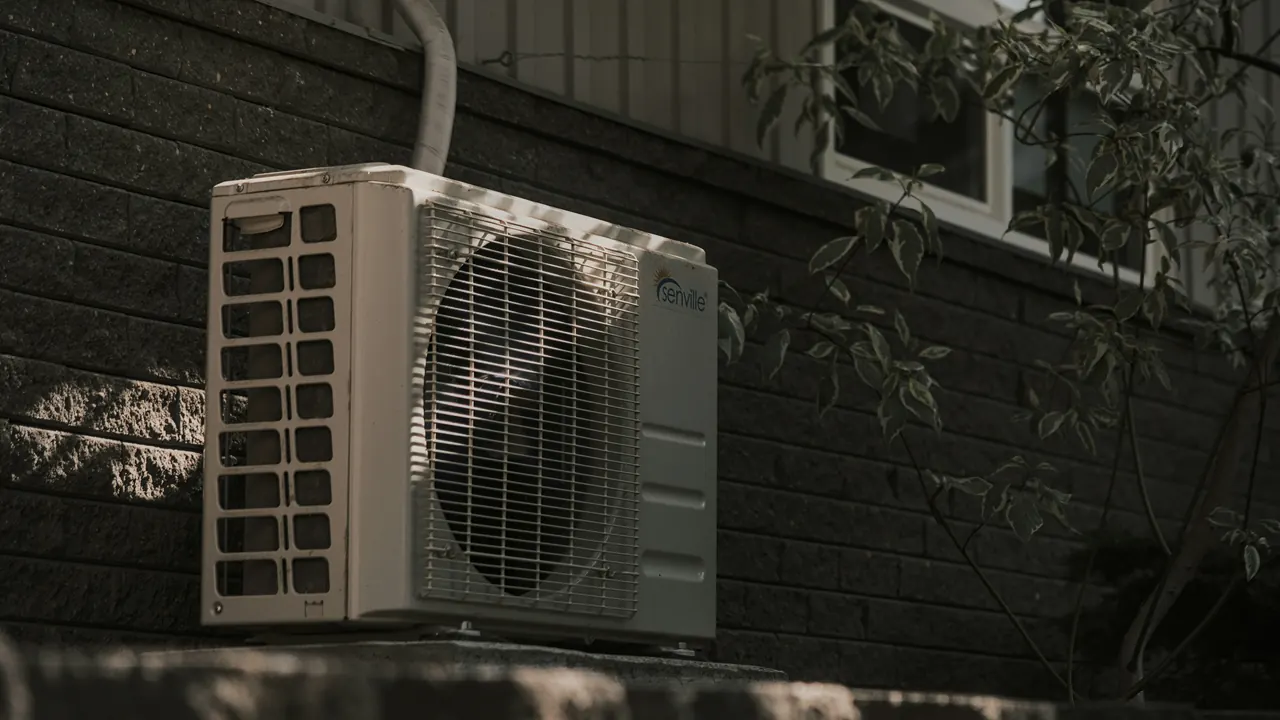
In Miami-Dade, replacing an air conditioner is permitted mechanical work, even when the new unit is the same size as the old one. The job should be done by a Florida-licensed air-conditioning or mechanical contractor, and the contractor's permit is inspected by the local building department. You can check any contractor's state license on the Florida Department of Business and Professional Regulation (DBPR) website before you sign.
Does an AC replacement need a permit?
Yes, in practice. Miami-Dade County's mechanical fee schedule lists the "exact change out of existing unit" as a permitted category with its own fee code, and warns that work done without a permit incurs a double fee. DBPR's consumer guidance says that air conditioning is among the work that requires a state license and typically also needs a permit, and tells owners to be wary of anyone who says a permit is not needed.
Florida also restricts starting work that requires a building permit without one. Section 489.127(1)(h), Florida Statutes, makes it unlawful to begin or perform work requiring a permit under chapter 553, part IV, without that permit in effect.
The 2026 small-project exemption does not cover AC
Florida's 2026 law on building permits and inspections (CS/CS/HB 803, Chapter 2026-63, effective July 1, 2026) creates a new exemption in s. 553.79(1)(g) for certain work valued under $7,500 on a single-family home. The bill text excludes electrical, plumbing, structural, mechanical, and gas work, and excludes property in a flood hazard area. It also bars splitting a project into pieces to get under the limit and requires a written exemption request. An AC replacement is mechanical work, so it falls outside this exemption.
Who issues the permit
Permits are issued by the building department with jurisdiction over the address. That is Miami-Dade County for unincorporated areas, or the municipality's own building department in cities such as Miami Beach and Hialeah. Forms and submittals vary. Two published examples show the range:
- Miami Beach asks for an equipment data form covering the existing and new equipment, an AHRI certificate for the new equipment, and proof of wind and flood compliance (a Notice of Acceptance or state product approval, manufacturer wind-resistance literature, or engineering). It requires equipment to be elevated no lower than the lowest existing habitable floor elevation, and the form must be posted at the job site for the inspector.
- Hialeah asks for state certification or registration information, existing and new equipment data (including SEER or EER and AHRI reference number), and, for roof-mounted units, wind load calculations with anchoring details and the unit's Notice of Acceptance or state product approval.
The point is not to memorize forms. Ask the contractor which jurisdiction applies and which documents will be submitted for your address.
What inspections happen
Inspection requirements are set by the permit and the building department, so they vary by job. Based on the municipal forms above, items a building department may check include:
- The equipment matching the permit and data sheet.
- Wind anchoring or tie-down for the outdoor unit, a particular concern in Miami-Dade's hurricane exposure.
- Flood elevation of the equipment, where required by local ordinance.
- Duct smoke detection or testing, where applicable. Hialeah's sheet specifies a smoke candle for duct smoke tests.
- Electrical disconnects matching the equipment label. Hialeah states an electrical permit is required if a disconnect must be replaced.
Reinspection fees can apply if work is not ready. Ask your contractor who schedules inspections and when you will receive the final approved permit record.
The Florida Building Code edition also matters. Miami-Dade's residential mechanical review guidelines apply the 2023 (8th) edition. The 9th (2026) edition takes effect December 31, 2026, and Miami-Dade's notice says applications filed through its online portal after 4 PM on December 30, 2026 must follow it. Confirm which edition applies to your permit application date.
Who may install your air conditioner
Florida licenses contractors by class. Under s. 489.105, Florida Statutes:
- Class A air-conditioning contractor: unlimited scope for central air-conditioning, refrigeration, heating, and ventilating systems.
- Class B air-conditioning contractor: the same general systems, limited to 25 tons of cooling and 500,000 Btu of heating in any one system.
- Class C air-conditioning contractor: limited to servicing air-conditioning, heating, and refrigeration systems. The statute says only people certified or registered as Class C on October 1, 1988 could hold this class afterward,.
- Mechanical contractor: unlimited scope for air-conditioning, refrigeration, heating, and ventilating systems and broader mechanical work.
A certified contractor holds a state certificate of competency and may work anywhere in Florida. A registered contractor met the competency requirements of a specific local jurisdiction and may work only in the places where registered. Miami-Dade also licenses contractors through its own Construction Trades Qualifying Board under Chapter 10 of the county code, with mechanical licenses reviewed in its Division B. The county says it handles four categories, including mechanical.
Section 489.103 lists exemptions. Two are relevant to AC:
- An owner-builder exemption lets an owner of a one- or two-family residence build or improve it for their own occupancy, not for sale or lease, if they personally sign the permit application and disclosure and directly supervise the work. Sale or lease within one year creates a presumption the exemption was misused. The permit and inspection still apply, and refrigerant work requires an EPA-certified technician, so this option is limited in practice.
- A narrow exemption covers selling, servicing, or installing small ductless-style units of no more than 3 tons or 36,000 Btu that have a factory-installed cord and plug, such as plug-in units. A ducted system or a hard-wired mini-split is not described that way.
How to verify a license
- Get the contractor's name, business name, and license number. DBPR says licensed contractors must include a license number in advertising.
- Search the number on DBPR's online license portal (myfloridalicense.com). The portal lets you search by name or number. Confirm the license is active, the class covers air conditioning or mechanical work, and check for disciplinary history.
- Confirm any local license or registration through the Miami-Dade Contractor Licensing Section (786-315-2880) or your city.
- Confirm the person named on the permit is the contractor you hired.
DBPR notes that a local business registration or LLC filing does not make a business a licensed contractor, and s. 489.127 says a local business tax receipt is not a license.
Risks of unlicensed work
Under s. 489.127, performing or advertising contracting without the required license is a first-degree misdemeanor, a repeat violation is a third-degree felony, and a violation during a declared state of emergency is a felony. The state can issue stop-work orders, and local code enforcement can issue citations. Under the statute, a local ordinance may set an initial civil penalty of up to $2,000, and a board or magistrate may impose up to $2,500 per day. Miami-Dade's licensing brochure also mentions civil citations of up to $5,000 under county rules.
For you as the property owner, practical risks include work that was never inspected, a permit record that does not match what was installed, a double permit fee to legalize it, and difficulty proving the work was done correctly later. Licensed contractors face discipline for proceeding without permits and inspections under s. 489.129. A contractor also may not pull a permit for work they have no contract for, or lend their license number to someone else.
Questions people ask
Can I replace my own AC and skip the permit?
An owner-builder exemption can allow an owner to act as contractor on their own home in limited circumstances, but it does not remove the permit and inspection requirement, and refrigerant must be handled by a certified technician. Check with the building department first.
Is a same-size replacement exempt?
Not in Miami-Dade's fee structure, which treats exact change-outs as permitted work.
Can my contractor use a different company's license?
No. Letting an unlicensed person use a license number is prohibited under s. 489.127(4).
Where do I report unlicensed activity?
DBPR lists an unlicensed activity hotline at 1-866-532-1440 and an email address on its consumer guidance.
Check before you decide
- Confirm the contractor's license class and status on DBPR before signing.
- Ask who pulls the permit, in whose name, and what it costs.
- Ask what inspections to expect and who schedules them.
- Get the permit number and keep the final approved record.
- Be cautious of anyone who says a permit is unnecessary.
Related: HVAC services and choosing an AC system.