
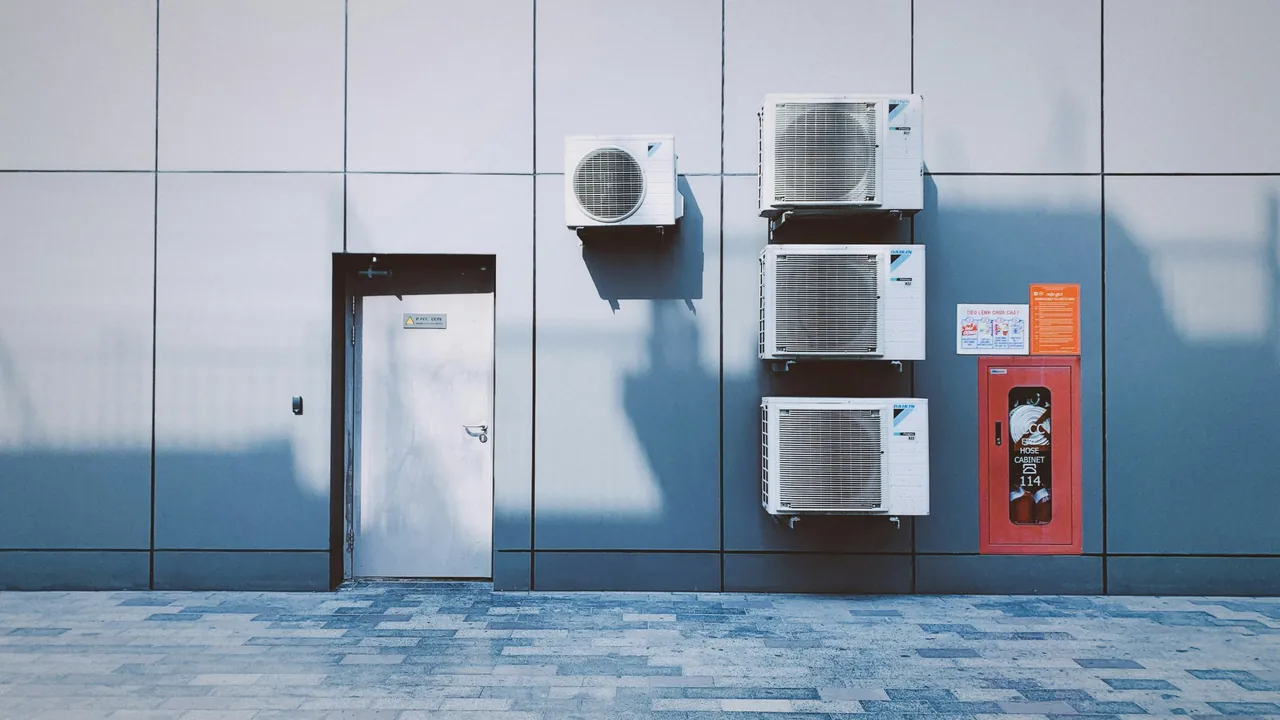
A proper AC installation in Florida starts before any equipment arrives: a site visit with a load calculation, a written proposal, and a permit pulled by the licensed contractor. On install day the crew sets the equipment, connects refrigerant lines, condensate drain, and ducts, then tests airflow and refrigerant charge. A county inspector signs off at the end. Each stage leaves a paper trail you can ask to see.
Step 1: Site visit and load calculation
A good bid begins with someone measuring your home. The contractor should size the system with a Manual J load calculation, which estimates how much heat the house gains. ACCA, the trade group that publishes the method, calls it the national standard for residential load calculation. Its inputs include outdoor design conditions, windows, walls and ceilings, air leakage, internal heat from people and appliances, and duct and ventilation loads.
Why it matters in Florida: the U.S. Department of Energy's right-sizing guide explains that an oversized system cools the air quickly and shuts off before it has removed much moisture, so humidity can stay high. Rules of thumb based on square footage tend to oversize. For more on sizing, see AC sizing and efficiency in South Florida.
DOE also describes Manual S (equipment selection) and Manual D (duct design) as companions to Manual J. Ask which of these the contractor will actually do, and ask for the calculation in writing.
Step 2: Equipment selection and the written proposal
The proposal should name the exact outdoor unit, indoor coil or air handler, and thermostat. ENERGY STAR's bid sheet suggests asking whether the contractor will provide an AHRI certificate. AHRI certifies split systems as matched pairs of indoor and outdoor units, and its directory can generate a certificate of product ratings for a certified match.
Also use the proposal to settle scope: duct repairs, new refrigerant lines, a new condensate drain, the pad, the thermostat, and permit fees. A bid that leaves these out may cost less on paper and more later. If the refrigerant type is new to you, see the R-410A to A2L transition.
Step 3: Contract and permit
Replacing central AC in Miami-Dade is permitted mechanical work, and the licensed contractor applies. AC permits and licensing covers who may pull it. Documents vary by city. One municipal change-out form in Miami-Dade County asks for an equipment data form, a copy of the AHRI certificate, proof the unit meets wind and flood tie-down rules (such as the unit's Notice of Acceptance, manufacturer wind data, or sealed engineering), and the qualifier's license number. That form does not mention a Manual J, so confirm what your own building department wants.
The County's residential mechanical plan review guideline lists sizing of heating and cooling equipment, duct design, return air, and energy code items among the points the building official checks. Its code references are to the 2023 Florida Building Code. The 9th Edition is scheduled to take effect December 31, 2026, so ask your contractor which edition governs a permit filed near that date.
Step 4: Installation day
Details depend on your home, but the work usually includes:
- Removing the old equipment. Refrigerant must be handled by technicians holding EPA Section 608 certification; EPA also limits refrigerant purchases to certified technicians.
- Setting the new outdoor unit. The County's final inspection checklist looks for a level pad at least 3 inches above grade, a 30 by 30 inch working space at the control side, anchorage (the checklist cites bolts rated for 500 pounds of pull-out under Miami-Dade requirements), and tamper-resistant caps on access ports.
- Installing the indoor coil or air handler and refrigerant lines. ENERGY STAR's bid sheet asks whether new refrigerant lines will be installed rather than reusing old ones.
- Connecting the condensate drain. In Florida's humid air an AC removes a lot of water. The County checklist cites condensate lines sloped at 1 percent with a minimum three-quarter inch inside diameter, traps per the manufacturer, and, for ductless mini-splits, an inline check valve or trap. A blocked drain is a common cause of leaks; see clogged condensate drains.
- Checking, sealing, and insulating ducts. ENERGY STAR's bid sheet asks whether ducts will be inspected, repaired, sealed at the seams before insulating, and tested for leakage.
- Installing the thermostat and electrical connections.
Step 5: Startup and commissioning
Commissioning means testing the system and recording the numbers, not just turning it on. ENERGY STAR's installation checklist lists these checks: airflow across the coil, refrigerant charge verified by pressure and temperature readings (superheat and subcooling), static pressure, duct leakage, and a thermostat test of fan and cooling modes. The program's bid sheet says improper installation can cut a system's performance by as much as 30 percent, which is why these tests matter.
Those figures belong to the voluntary ENERGY STAR program, not to the building code. Still, they are a useful yardstick for the questions below.
Step 6: Inspection and sign-off
The mechanical permit closes with a final inspection. The County's checklist for AC work includes equipment capacity compared with the calculated load (not above 1.15 times the calculated load), condensate protection, the energy performance display card, one thermostat per separate system, duct pressure testing where required, and recording the unit's model and serial numbers. It also notes a Notice of Commencement is not required for AC repair or replacement under $7,500; confirm the current threshold with the building department.
Some checklist items apply only to larger or commercial systems, such as smoke detectors in return air above 2,000 CFM. Your inspector decides what applies to your job.
What to ask the contractor
- Will you perform a Manual J calculation for my home, and will I get a copy?
- Which exact equipment is on the AHRI certificate?
- Will you test duct leakage and airflow, and give me the readings?
- How will you verify refrigerant charge?
- Who pulls the permit, and when will the inspection happen?
- What does the warranty cover, and who registers it?
Questions people ask
Can a contractor skip the load calculation if the new unit is the same size?
The existing size may not have been correct to begin with. DOE says rules of thumb tend to oversize, and the County's final inspection compares capacity with the calculated load. Ask for the calculation in writing.
What paperwork should I keep?
The signed contract, permit and final inspection record, the AHRI certificate, any Manual J report, test readings, and the warranty documents. ENERGY STAR's bid sheet suggests asking for these at closeout.
Do I need to be home during installation?
Plan to be reachable. Someone should be available to approve any change in scope and to walk through the system, filter location, and thermostat at the end.
Check before you decide
- The contractor's state license verifies on the DBPR site.
- The proposal names equipment, scope, permit responsibility, and warranty.
- Load calculation, AHRI certificate, and test readings are promised in writing.
- The permit is pulled before work starts and closed with a final inspection.
- Rules and fees change; confirm current requirements with your building department.