
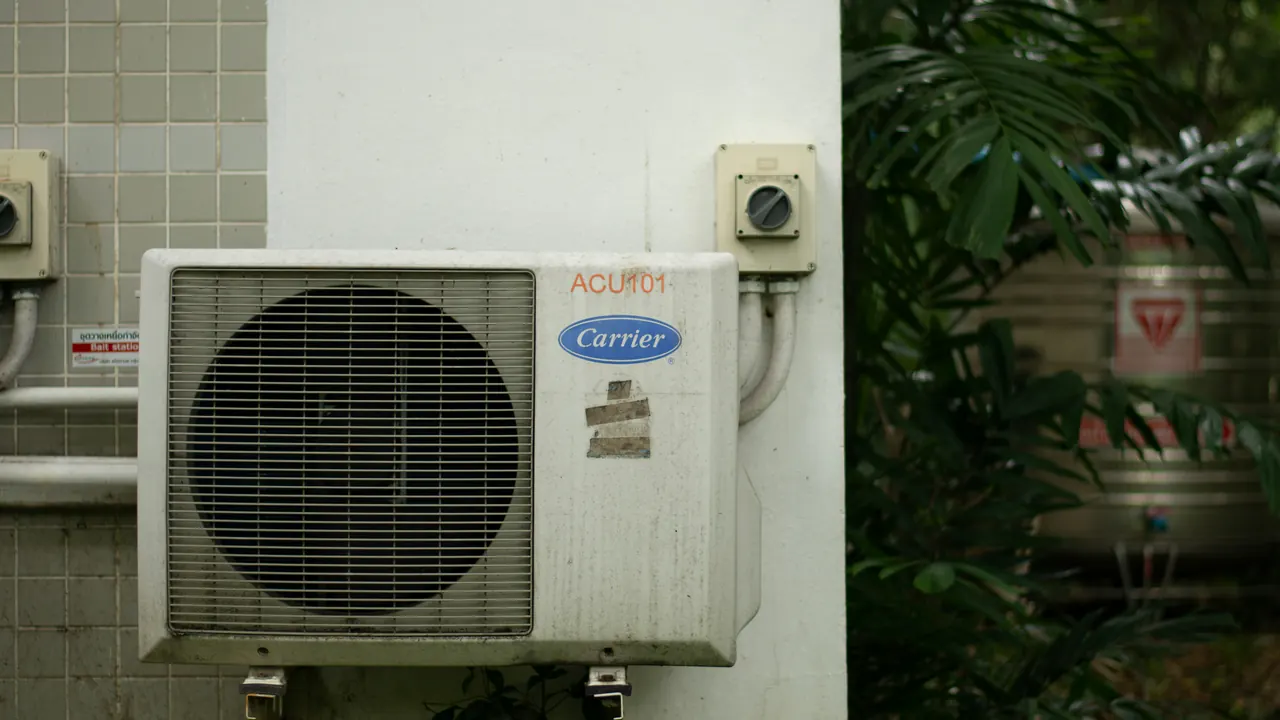
Duct leakage is air that escapes from, or is pulled into, the ducts that carry cooled air through your home. Under the 2023 (8th Edition) Florida Energy Conservation Code, new ductwork that runs outside the conditioned space generally has to be insulated and tested for leakage by a qualified tester. The test pressurizes the ducts and measures how much air gets out, then compares that number to a limit. A tight, insulated duct system is part of how an air conditioner delivers the cooling it is rated for.
Why ducts matter more than the label on the outdoor unit
A duct system is a set of pipes for air. Any gap in a joint, seam or connection to the air handler lets air move where you did not intend. ENERGY STAR says that in a typical house about 20 to 30 percent of the air moving through the duct system is lost to leaks, holes and poorly connected ducts. Signs include high summer bills, rooms that are hard to cool and kinked or crushed flexible duct.
In a hot, humid climate there is a second concern. A Florida Solar Energy Center paper (1998, based on field tests of small commercial buildings in central Florida) explains that leaks pulling air from conditioned space have small energy, infiltration or humidity effects, while leaks that draw from a hot, humid attic can have large effects on all three. The same paper cites earlier Florida research finding that more than half of duct leakage in the state's homes occurred in building cavities used as ducts, and notes that code changes have sharply reduced that practice in new houses. The paper is about commercial buildings, so treat the principle, not its numbers, as the takeaway.
What the Florida Energy Conservation Code requires
The code in force today is the 2023 Florida Building Code, Energy Conservation, 8th Edition. Florida's 9th Edition (2026) is scheduled to take effect on December 31, 2026. Miami-Dade County says plans and permit applications submitted on or after that date must comply with it, and that online portal applications submitted after 4 PM on December 30, 2026 must too. This article describes the 8th Edition as shown on county compliance forms. This article did not confirm whether the 9th Edition changes any duct provisions, so check before a project that will be permitted near that date.
County forms for the 8th Edition describe these duct provisions:
- Sealing. Ducts and the air handler must be "substantially leak free," as defined by the leakage test below.
- Insulation. Minimum installed R-values for ducts in unconditioned space are R-8 for ducts 3 inches or larger in diameter in an attic and R-6 for ducts 3 inches or larger elsewhere in unconditioned space. For ducts under 3 inches, the minimums are R-6 in an attic and R-4.2 elsewhere. Ducts entirely inside conditioned space have no minimum.
- Testing. Ducts must be pressure-tested for air leakage, either at rough-in (before the walls are closed) or after construction. Miami-Dade's mechanical inspection checklist lists this as a mandatory verification and cites the energy code section for it.
- Air handler location. The county compliance form states that air handlers are not allowed in attics. Miami-Dade's checklist includes attic air handler installation as an item to verify. Ask the building department how this applies when you replace an existing unit.
The leakage limits
The limit is expressed as a number called Qn: the total duct leakage in cubic feet per minute at 25 pascals (cfm25), divided by the home's conditioned floor area in square feet. Under the prescriptive path, county forms show these limits:
| Test condition | Limit (Qn) | Same limit per 100 sq ft |
|---|---|---|
| Air handler installed during the test | 0.04 or less | 4 cfm25 |
| Air handler not installed during the test | 0.03 or less | 3 cfm25 |
Under the performance (energy rating) path, the measured result must not exceed the duct leakage value assumed in the energy calculation. A passing test is reported as a signed test report, which many Florida counties provide as a standard form.
When testing is not required
The Putnam County form notes two cases where the test is not required: when all ducts and the air handler are inside the building's thermal envelope, and for additions or alterations where ducts extended from an existing system through unconditioned space are shorter than 40 linear feet. These are summaries on a county form, not the code itself. Whether your replacement or alteration qualifies is a question for the building official.
What a duct leakage test involves
A duct leakage test is performed with a calibrated fan (a duct tester) and a pressure gauge. According to the Building America Solution Center, the tester seals the register openings, connects the fan to the air handler or main return, and runs the fan until the ducts hold 25 pascals of pressure. The airflow the fan needs to hold that pressure is the leakage, in cfm25.
Two kinds of results are common:
- Total duct leakage counts all leakage, whether the leak is inside or outside the thermal envelope. It can be tested at rough-in or at final.
- Leakage to outside counts only air escaping to unconditioned space or outdoors. It needs a blower door and is usually done at final.
The test must follow ANSI/RESNET/ICC 380. County forms say it must be done by a person defined in section 553.993(5) or (7) of the Florida Statutes (an energy auditor or an energy rater) or by a person licensed under section 489.105(3)(f), (g) or (i) (Class A air-conditioning, Class B air-conditioning and mechanical contractors). The tester signs a statement of the results.
Fixing leaks and insulating ducts
Sealing is done with mastic (a thick paste) and fiberglass mesh tape, or with metal tape. ENERGY STAR advises against standard duct tape because it does not last. A U.S. Department of Energy weatherization job aid assigns the repair by gap size: mastic alone for gaps under 1/4 inch, mesh plus mastic for gaps up to 3/4 inch, and a mechanically fastened patch for larger holes. It also covers sealing the boots where ducts meet registers and the air handler cabinet.
Insulation also helps control condensation. The EPA says condensation on uninsulated air conditioning ducts is a moisture problem and recommends sealing and insulating ducts that run through spaces without air conditioning.
Duct and equipment work is handled through the mechanical permit process. Read about AC permits and licensing in Miami-Dade.
Questions people ask
Does my AC replacement need a duct leakage test?
It depends on what is replaced and the building department's reading of the code. County forms exempt some alterations with short duct extensions and systems fully inside the thermal envelope, but a full ductwork replacement or new system is different. Ask the contractor to state in writing whether a test is required and who will perform it.
Who is allowed to do the test?
Under the county forms for the 2023 code, it must be a person defined in section 553.993(5) or (7), Florida Statutes, or a licensed Class A or B air-conditioning contractor or mechanical contractor. The test follows ANSI/RESNET/ICC 380.
What is a good duct leakage number?
For code compliance on the prescriptive path, 0.04 Qn (4 cfm25 per 100 square feet) or less with the air handler installed. Lower is better, but the code limit is the figure the permit uses.
Can I seal ducts myself?
ENERGY STAR says homeowners can do it, and many choose a contractor. Use mastic or metal tape, not standard duct tape, and keep work on the air handler and electrical components with a licensed professional.
Check before you decide
- Ask whether the permit requires a duct leakage test, and get the test report with the measured value.
- Confirm the R-value of the duct insulation and where the ducts run (attic, closet, conditioned space).
- Ask how the air handler location complies, especially if it is in an attic.
- Ask what sealant will be used and whether boots and the air handler cabinet will be sealed.
- If the permit will be filed near December 31, 2026, confirm which code edition applies.
For help with system design and installation, see HVAC services. Rules and forms change, so confirm with the Miami-Dade or municipal building department.