
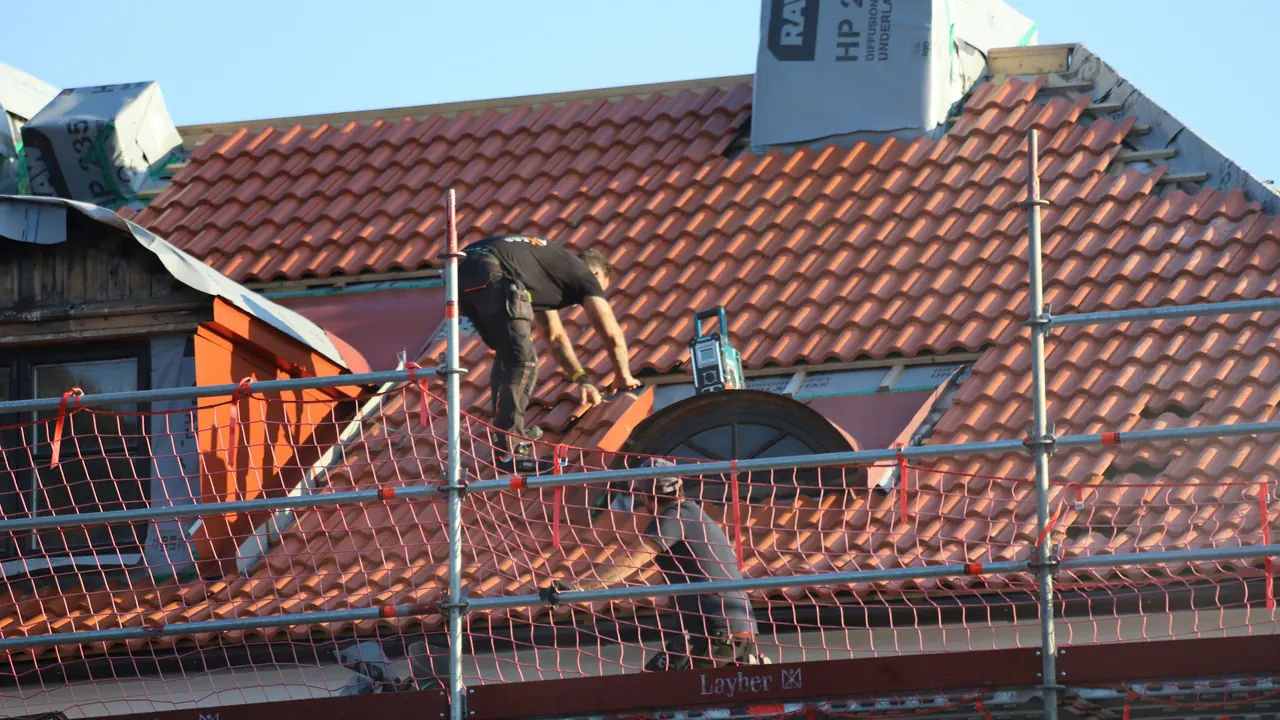
In Florida, the "25% rule" is a Florida Building Code provision that once required an entire roof or roof section to be brought up to current code if more than 25 percent of it was repaired, replaced or recovered in 12 months. Since a 2022 law, section 553.844(5) of the Florida Statutes says that for a roof built, repaired or replaced under the 2007 Florida Building Code or later, only the portion being worked on must meet the current code. Older roofs and roofs without permit records may still be treated under the original rule.
Because codes and local practice change, confirm how your building department applies the rule before you decide between repair and replacement.
What the 25% rule was
For many years the Florida Building Code limited roof work to no more than 25 percent of the roof area or roof section in any 12-month period. Going beyond that meant the entire roofing system or section had to meet the code in force at the time. According to the Florida Roofing and Sheet Metal Contractors Association (FRSA), the provision appears in the Building volume (1511.1.1), the Residential volume (908.1.1) and the Existing Building volume (706.1.1). In the HVHZ, Miami-Dade's code summary places the rule in section 1521.4.
Three terms matter:
- Roof section. The Existing Building code defines it as part of a roof divided from the rest by features such as expansion joints, parapets, flashing, elevation changes, roof type or legal description. A single pitched roof with two sides is generally one section.
- 12-month period. The percentage is counted over a year, not per repair visit.
- Tie-off work. In 2021 the Florida Building Commission issued a declaratory statement saying that related work needed to tie a repair into the existing roof is not counted toward the 25 percent threshold, according to FRSA.
How the rule changed
The rule's history, in short:
- Before 2022. Any roof work above the threshold triggered full compliance for the roof or section.
- 2022. Legislation (SB 4-D) added subsection (5) to section 553.844. If the roofing system or section was built, repaired or replaced under the 2007 Florida Building Code or a later edition, and 25 percent or more is being repaired, replaced or recovered, only that portion has to meet the current code. The statute bars local governments from amending the exception by ordinance, and the Florida Building Commission was directed to adopt it by rule.
- 2023 to 2024. Miami-Dade's summary of roofing changes effective January 1, 2024 includes the same exception in the HVHZ text.
The 2007 code did not take effect until March 1, 2009, so FRSA and other sources say the permit generally has to have been issued on or after that date. Building permit records are how that is shown, and a roof with no permit history may not qualify. Palm Beach County's policy memo (effective January 1, 2024) is one example of a local office summarizing both the original rule and the exception.
What is current as of October 2026
- The Florida Building Code, 8th Edition (2023), effective December 31, 2023, is the edition in force.
- The 9th Edition (2026) is scheduled to take effect December 31, 2026. Miami-Dade has said permit applications and plans submitted on or after that date must follow it.
- The 2026 Florida Statutes version of section 553.844 still contains the subsection (5) exception, with 2022 as its most recent amendment.
- A law firm's summary says the Building Commission has approved reroofing revisions for the 9th Edition that could still change before publication. Check the final text when it is published.
If you are planning a project that crosses December 31, 2026, ask the building department which edition will apply to your permit.
Signs a roof may be failing
An inspection starts with what you can see. Roofing and inspection guidance lists these common signs:
- Shingles: missing, cracked, curled or cupped shingles, granule loss showing as dark patches or granules in gutters, and raised nail heads
- Tile: broken, slipped or missing tiles, signs of moisture under tiles, and old repairs such as tiles siliconed back in place
- Metal: rust, split seams, loose or lifted panels, and corrosion where unlike metals touch
- Flashing and penetrations: bent, rusted or detached flashing around chimneys, vents and walls
- Inside the attic: daylight through the deck, dark stains or streaks, and sagging
Missing shingles, loose flashing and holes should be handled quickly. Stains and sagging need a professional to find the cause.
Repair or replace: what to weigh
A repair makes sense when damage is limited, the rest of the roof is sound, and the work stays below the thresholds that matter to your permit office. Replacement makes sense when problems are widespread, repairs keep returning, or the damaged area is large enough that patching would leave a poor-performing roof around the repair.
Questions to ask:
- How much of the roof section is affected, and is tie-off included in that count?
- Was the roof permitted on or after March 1, 2009, and can that be documented?
- What is the condition of the deck underneath?
- Will the repair match the existing product, and is the product still approved in Miami-Dade?
- Would a replacement trigger deck and secondary water barrier requirements under section 553.844(3)?
Replacement also changes the paperwork. A roof replacement on a site-built single-family home must include a secondary water barrier and improved deck attachment, and some higher-value homes must also address roof-to-wall connections. See what drives roof replacement cost in Miami-Dade.
What inspectors look for
Miami-Dade's roof inspection checklist is built around the installation stages. Inspectors check things like fasteners and spacing, underlayment, edge metal, valleys, flashing at walls and penetrations, and whether products match their NOA. For tile, the final inspection includes a static uplift test for adhesive or mortar-set systems. Your permit tells you which inspections apply. See roof permit requirements in Miami-Dade.
Questions people ask
Does the 25% rule still exist?
Yes, as a code provision, but section 553.844(5) limits it for roofs built, repaired or replaced under the 2007 Florida Building Code or later. If your roof has older or undocumented work, the original rule may still apply.
Does the exception apply in Miami-Dade's HVHZ?
Miami-Dade's own summary of the 2023 code changes includes the exception in the HVHZ roofing text (section 1521.4). The building official still decides how it applies to your permit.
Can I recover (re-roof over) instead of tearing off?
Some recovers are allowed and some are not, depending on the existing roof and the number of layers. Ask the building department before assuming.
Who decides what counts toward the 25 percent?
The local building official, using the code definitions and any Commission declaratory statements. Get the determination in writing.
Check before you decide
- Find the permit history for the existing roof.
- Get the damaged area measured and mapped by roof section.
- Ask the contractor to state, in writing, how tie-off is handled.
- Confirm the code edition that will apply to your permit date.
- Ask the building department to confirm how the exception applies.
Rules change, so verify them with your building official before work begins.