
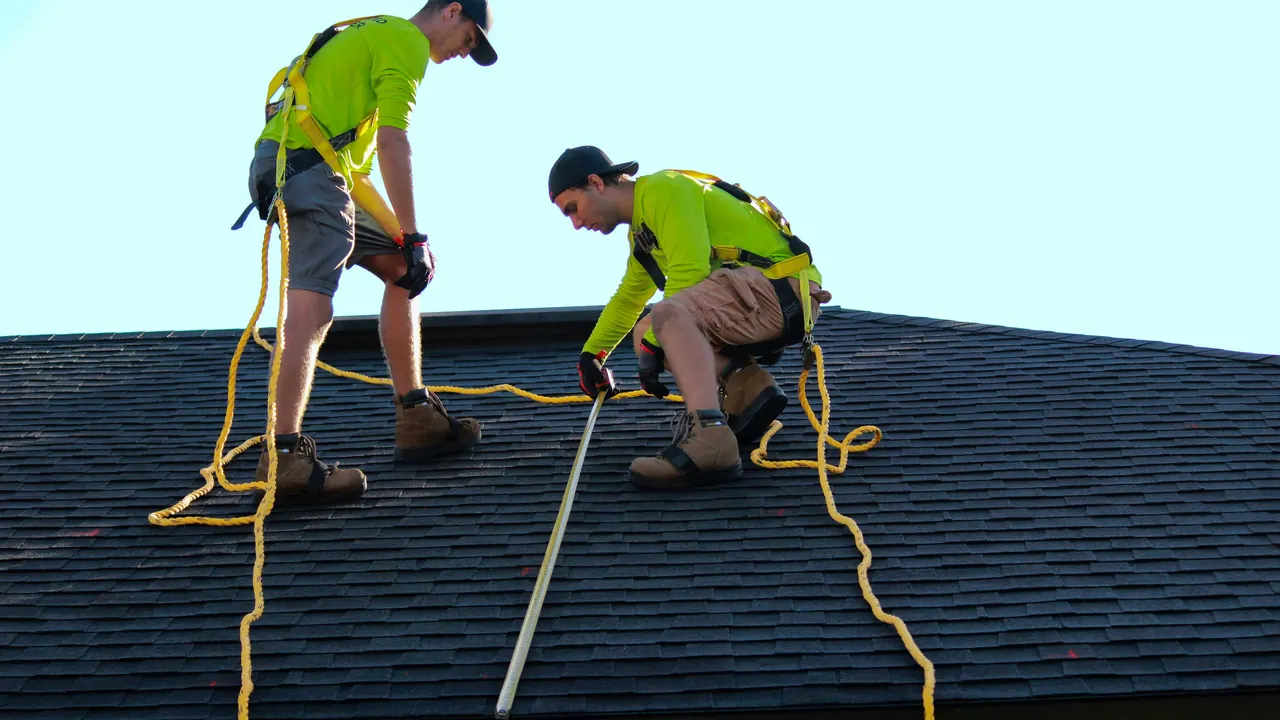
No source I found gives a single, independent lifespan for each roof type in South Florida. Manufacturers and trade groups publish ranges, and those ranges come with caveats: they are often for the whole country, often assume good installation and maintenance, and are sometimes written by groups that sell one material. Use them as rough planning figures and let a licensed roofer's inspection of your actual roof decide.
What the published ranges say
The table lists figures that the cited sources state. They are claims from the organizations named, not measurements of Florida roofs, and they do not agree with each other.
| Roof type | Published range or statement | Who says it |
|---|---|---|
| Asphalt shingle | Most residential roofs need replacing roughly every 20 to 25 years, depending on materials, installation and location | GAF (August 2026) |
| Asphalt shingle | 12 to 20 years | Metal Roofing Alliance, a metal roofing trade group |
| Concrete tile | Average life expectancy of 75 years, citing a National Association of Home Builders study | EAGLE Roofing (manufacturer) |
| Metal | Service life often 40 to 70 years | Metal Roofing Alliance (Durability page) |
| Metal | Roughly 30 to 50 plus years | Metal Roofing Alliance (FAQ page) |
| TPO (flat) | 20 to 30 years | GAF commercial (January 2026) |
| PVC (flat) | 15 to 30 years | GAF commercial |
| SBS modified bitumen | 10 to 30 years | GAF commercial |
| APP modified bitumen | 10 to 20 years | GAF commercial |
| Built-up roofing | 15 to 20 years | GAF commercial |
| EPDM | 10 to 15 years | GAF commercial |
Note the overlap and the gaps. The Metal Roofing Alliance gives different metal figures on two of its own pages. The tile figure comes from a manufacturer that sells tile, and EAGLE's own brochure adds that the roof deck, underlayment and flashings have a shorter life than the tile and need periodic inspection.
A warranty is not a lifespan
A "lifetime" warranty can mislead. GAF's page on its lifetime roofing system warranty defines "lifetime" by how long the original owner holds the home, and it does not state an expected service life for the shingles. EAGLE's tile warranty excludes the underlayment, flashing and workmanship, and excludes damage from hurricanes and other acts of nature. Read what is covered, for how long and what voids it. A warranty may also not match what an insurer will accept, because insurers set their own roof-age rules. See 4-point inspections and roof age.
What shortens roof life in South Florida
Sun and heat
Sun and heat age every roof covering. GAF's commercial guidance names ultraviolet exposure as a cause of brittleness, cracking and seam separation in flat roof membranes, and thermal cycling as a cause of cracking and loose fasteners. For shingles, the FSEC attic review cites studies finding that shingle temperature depends more on shingle color and roof location than on attic ventilation. Those studies also estimate small ventilation effects in Miami. GAF's residential guidance, by contrast, says poor attic ventilation lets heat and humidity build up and can shorten the life of sheathing and shingles. The two views are not settled, so ask a roofer about the specific attic. See roof and attic ventilation in South Florida.
Salt air
Salt corrodes metal. The Metal Roofing Alliance lists aluminum, stainless steel, zinc and copper as preferred in coastal settings, notes that galvanized or Galvalume steel is more affordable, and warns that mixing the wrong metals, including clips and fasteners, can cause galvanic corrosion. It also says coastal owners may need to rinse metal roofs more often, including areas under overhangs that rain does not reach. FRSA's article on coastal metal roofs reports that FEMA recommends stainless steel fasteners within 3,000 feet of salt water, and that Florida code editions require corrosion-resistant fasteners. The Metal Roofing Alliance adds that suppliers define "marine environment" differently, from about 1,000 feet to a mile from salt water, so check how your warranty defines it.
Storms
Wind and debris damage roofs well before their calendar age. In IBHS's review of Hurricane Ian in southwest Florida, roofs 10 or more years old were especially vulnerable among asphalt shingles, and tile roofs rarely suffered significant damage except those over 20 years old. About half of shingle roofs, about 40 percent of tile roofs and around 12 percent of metal roofs had damage, with most metal-roof damage tied to nearby structures failing. These are observations from one storm, not predictions for your roof.
Other factors
- Installation quality. GAF lists installer experience and material choice among the factors.
- Trees and shade. Dead branches can damage a roof and heavy shade can keep shingles damp.
- Moisture and ponding. GAF's commercial guidance notes that wet insulation, ponding water and sagging decks shorten the life of a flat roof.
- Maintenance. GAF recommends flat roof inspections twice a year. EAGLE's brochure recommends that a licensed roofer inspect the deck, underlayment and flashings about every couple of years.
Questions people ask
How do I know how old my roof is?
Look for the permit record and invoice from the last re-roof, and ask the building department what permit records it holds for the address. If the roof was replaced in sections, ask which sections were completed when.
Does a longer-lived material always cost less over time?
Not necessarily. Material cost, the roof deck, the flashing, the wind-rating requirements and the likely replacement date all matter. Ask for itemized estimates and compare the full scope rather than the material alone.
My shingles are labeled "30-year." Will they last 30 years?
Not necessarily. A warranty term and an expected service life are different things, as the lifetime-warranty example above shows. GAF itself gives 20 to 25 years as the typical replacement window in its residential guidance, and the factors in this article can shorten it further.
Should I replace a roof because it reached a certain age?
Age is one factor. Condition, leak history, repairs, the permit rules for repairs and the insurer's requirements matter too. See repair or replace a roof.
Check before you decide
- Ask the roofer to inspect and report on the roof deck, underlayment and flashing, not just the surface.
- Ask what the published lifespan source is, and whether it applies to coastal South Florida.
- Read the warranty: what is covered, for how long, what voids it and who honors it.
- For metal, ask about the alloy, coating, fasteners and distance from salt water.
- Keep permit records and dated photos of each inspection.
This article is general information, not insurance or engineering advice. Roof life varies with each property, so use a licensed roofing contractor to assess yours.