
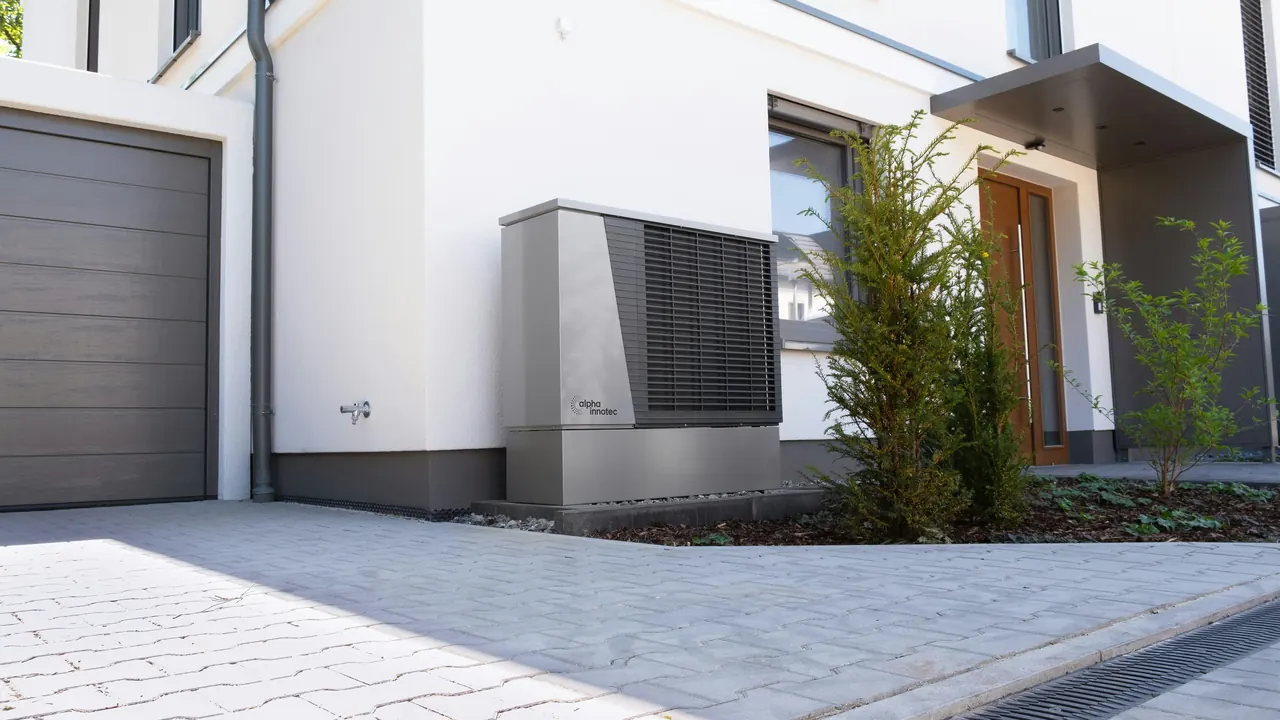
The EPA advises keeping indoor relative humidity below 60 percent, ideally between 30 and 50 percent. In South Florida, the air conditioner does most of that work, and it works best when it is correctly sized, runs in longer cycles and has a clear condensate drain. A standard AC removes moisture only as a side effect of cooling, so some homes add variable-speed equipment or a dedicated dehumidifier. Lowering the thermostat is usually not the fix.
Why humidity is a South Florida problem
Relative humidity (RH) is the amount of water vapor in the air compared with the most it can hold at that temperature. Warm, moist outdoor air is the normal condition here, and indoor moisture also comes from sources such as cooking and showering. The EPA notes that condensation forms when warm, humid air meets a cold surface.
The EPA says mold can grow on organic material when moisture and oxygen are present, that eliminating all mold indoors is virtually impossible, and that controlling moisture is the way to control mold. It also says wet building materials should be dried within 24 to 48 hours. The EPA lists 60 percent RH as a common moisture problem level.
ASHRAE's position document on indoor mold and dampness expresses its thresholds as a dew point rather than RH. It names a dew point consistently above 60°F as an early warning sign in existing buildings. ASHRAE also states that persistent dampness is "neither normal nor desirable," and it cites public health authorities who have documented associations between damp buildings and effects including worsened asthma and respiratory infections. This article makes no health claims beyond those sources. The position document is dated 2021, so check ASHRAE for a newer version.
How your AC removes moisture
An air conditioner cools air as it passes over the indoor coil. Moisture condenses on the coil and drains away. This means:
- The system must run long enough. DOE notes that oversizing equipment to cover uncertainty causes short-cycling, which reduces moisture removal. See sizing and choosing an AC system in South Florida.
- A colder coil removes more moisture. DOE slides note that efficient equipment often runs a higher evaporator coil temperature, which removes less moisture, and that upsized coils or airflow can make that worse.
- A clogged drain stops the job. DOE says clogged drain channels prevent a unit from reducing humidity. See AC maintenance in humid, salty South Florida.
- Ducts matter. The EPA says ducts in non-air-conditioned spaces should be sealed and insulated to keep condensation out, and that drain pans should slope toward the drain.
The fan setting
A Florida Solar Energy Center study (1987, on the equipment tested) found that running the indoor fan continuously reduced net moisture removal compared with letting the fan cycle with the compressor. In one test cycle, about 19 percent of the moisture condensed during the compressor's run time evaporated back into the space. The effect grew with more frequent cycles. If your thermostat offers a fan "on" setting, ask a technician how it affects humidity in your home.
Equipment that targets humidity
Variable-speed and multi-stage systems
A variable-speed blower can move less air at a time, which gives the air longer contact with the cold coil. A U.S. DOE research project reported on three instrumented homes (two in Houston and one in Savannah, not Florida) tested an "enhanced dehumidification mode" for central systems using a variable-speed blower. It lowered airflow when indoor RH rose above a trigger (55 percent in the example). In one test it produced a sensible heat ratio of 0.62 versus a typical 0.80 in normal cooling mode, meaning more of the work went to moisture. DOE described the work as preliminary. Product features and names vary, so ask a contractor what a specific model does and how it is controlled.
Whole-house dehumidifiers
A whole-house dehumidifier is ducted into the system and handles moisture while the AC handles temperature. A DOE Building America case study monitored one Florida home in Windermere for six months with two AC systems paired with a whole-house unit. At setpoints of 55 percent RH and 78°F, indoor RH stayed below 60 percent for 99.86 percent of the monitoring period. The report listed the measure's installed cost as $2,600 (2012 testing, published 2013), and projected small energy savings by modeling, not by measurement. It is one home, so do not treat it as a guarantee for yours.
DOE slides also mention ducted dehumidifiers in conditioned space as a supplemental option, alongside reheat designs that dehumidify without overcooling.
Portable dehumidifiers
The EPA names air conditioners and dehumidifiers as ways to control humidity when needed. A portable unit can help a single room or a damp closet, but it does not fix a duct leak, an oversized system or a clogged drain.
Thermostat and humidity settings
- Do not rely on a lower setpoint. The DOE case study notes that lowering the thermostat to remove moisture often does not keep humidity and comfort in check.
- Use a hygrometer. The EPA recommends measuring indoor humidity with a hygrometer (it cites roughly $10 to $50).
- Humidity-aware thermostats. Some controls can read RH and change equipment behavior. What they can do depends on the equipment. Ask the contractor to explain exactly what the control changes.
- Ventilation. DOE slides prefer controlled ventilation over random infiltration, because tighter, controlled air exchange lowers the moisture load.
Signs of a humidity or moisture problem
- Condensation on windows, walls or cold pipes (the EPA says it can signal high humidity).
- Musty odors, visible mold or water stains.
- A clammy feeling at normal thermostat settings.
- Water at the air handler or on ceilings under it.
The EPA says homeowners can often handle patches of mold under about 10 square feet, that larger areas or significant water damage call for professional guidance, and that cleaning mold without fixing the moisture source usually means it returns. It also says sampling is usually unnecessary when mold is visible and that no federal limits exist for mold or spores.
Questions people ask
What humidity should I aim for in Miami?
The EPA's guidance is below 60 percent RH, ideally 30 to 50 percent. Check with a hygrometer in several rooms over several days.
Will a bigger AC fix humidity?
DOE says oversizing causes short-cycling, which reduces moisture removal. A load calculation is the starting point.
Do I need a whole-house dehumidifier?
Not necessarily. Fix sizing, duct leaks, drain problems and ventilation first, then measure. If humidity stays high, ask about a variable-speed system or a dehumidifier.
Does mold mean my AC is broken?
Not by itself. Mold means there is moisture somewhere. A technician can check the drain, coil, ducts and airflow while you find and dry the source.
Check before you decide
- Ask for the load calculation used to size the equipment.
- Ask how the proposed system removes moisture when the temperature is already satisfied.
- Ask for the RH control setpoint and where the sensor is located.
- Ask what routine maintenance a dehumidifier needs, and who does it.
- Compare quotes on the same scope. See HVAC services for what a licensed contractor can evaluate.