
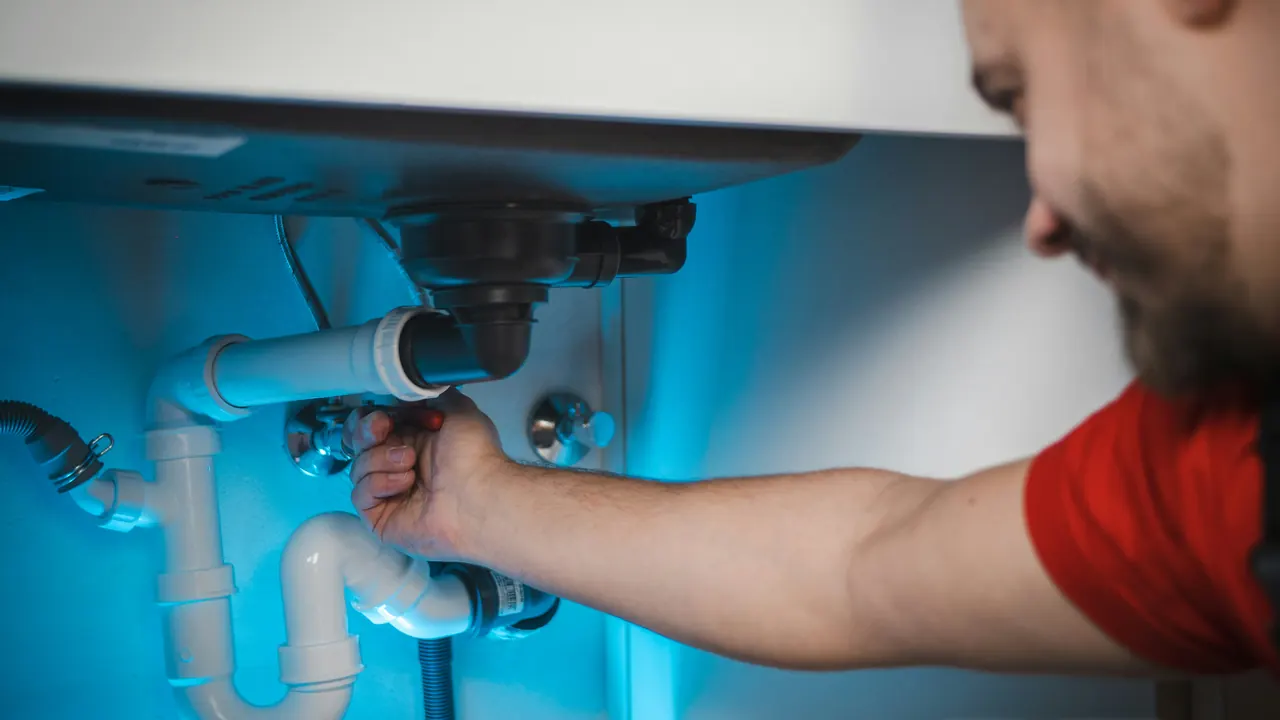
Before a hurricane, locate and test your home's main water shutoff valve, store drinking water, and know how your property drains. Afterward, use less water while the sewer system recovers, keep out of sewage-contaminated areas, and have a licensed plumber check anything that leaks, backs up, or smells. Most of this takes an hour before the storm, not specialized tools.
Before the storm: the main shutoff valve
Every home needs a known way to stop water at the building. Miami-Dade Water and Sewer says the house valve is generally on an outside wall where the water line enters the home, or near the water heater. The county maintains the line up to and including the meter box, and the account holder is responsible for everything past it.
Do this in advance:
- Find the house valve and make sure everyone in the household knows where it is.
- Turn it fully closed and open it again to confirm it moves. A valve that has not been turned in years can be stuck or can leak at the stem.
- Mark it so it is easy to find in the dark.
- If it is stuck or leaks, call a licensed plumber now rather than during a storm.
Why close it? A pipe broken by a fallen tree or flying debris can flood a house or condo unit quickly if the water stays on. In a condo or townhouse, you may share risers or shutoffs with other units, so ask the association where the building and unit valves are and who is allowed to operate them.
Note that Miami-Dade's own hurricane-season tips do not tell residents to shut off the water before a storm. Whether to close the valve ahead of landfall is a household decision, and many people close it if they evacuate. Ask a licensed plumber if you are unsure.
Store water before it is needed
Guidance varies by source and year:
- Miami-Dade Water and Sewer's 2022 tips say to keep one gallon per person and pet per day for seven days, and to fill containers with county tap water once a warning is issued.
- The county's 2020 tips said at least three days, with a half gallon per pet.
- FEMA's 2018 utilities guidance recommends at least 10 days, with about one gallon per person per day.
Take the larger, newer figure if you can store it. Use clean, sealed containers, and consider filling a bathtub with water for flushing toilets, not for drinking.
Other plumbing prep
- Water heater. Know where its shutoff is. If it is gas or electric, follow the manufacturer's guidance on shutting it off before leaving.
- Outdoor items. Secure or bring in anything attached to hose bibs and irrigation.
- Sump or ejector pumps. If you have a pump that moves wastewater or groundwater, it needs power. Ask a professional about its backup options.
- Photograph plumbing. Take pictures of fixtures, the water heater, and the valve location for your records.
- Know your septic or sewer. Homes on septic and homes on the county sewer face different issues, covered below.
Flooding, sewer backups, and backflow valves
Heavy rain and storm surge can overload sewers and raise groundwater. Floodwater can push sewage back up through drains, especially fixtures at low points. The county's guidance after storms is to minimize water use because pressure may be lower than normal and the sewer system may be strained by heavy rain.
A backflow valve (sometimes called a backwater valve) is a device installed in a drain line to stop sewage from flowing back into a building when the pipe is overloaded. Louisiana's homeland security office describes three common types: a gate valve, which seals strongly but must be closed by hand, so it depends on advance warning; a flap or check valve, which works automatically but seals less tightly; and combined designs. The source says a licensed plumber or contractor should install them to meet local codes, and that sump pump connections can be hard to seal. Whether a valve makes sense for a South Florida property depends on elevation, pipe layout, and local code, so ask the building department and a plumber. Do not assume it is the same as the testable backflow preventer on a water supply or irrigation line, which protects drinking water. The backflow prevention article covers that device.
Septic systems
The Florida Department of Health says septic systems with a dosing pump will not work without power, so avoid using water until power returns or the tank can fill and back up into the house. If the ground is saturated, reduce water use. For a slow or sluggish system, the department says not to pump the tank while the water table is very high, because the ground around a pumped-out tank can collapse, and to wait until floodwater recedes before repairs.
After the storm: what to check
- Do not use plumbing if sewage is visible or the ground is flooded. Reduce water use until services return and no sewage is on the ground, per the Florida Department of Health.
- Look at the water. The county says cloudy water after a storm can be flushed by running the tap until it clears, and calls it a temporary, cosmetic effect. Follow any notice the utility issues. For questions, Miami-Dade lists 786-552-4738 for addresses north of SW Eighth Street and 786-552-4181 for south.
- Check for leaks. Look for wet walls, ceilings, and cabinets. Read the water meter with everything off, wait two hours, and read it again. A change suggests a leak.
- Check for backups. Gurgling, slow drains, or sewage odors can mean a problem in the line. The article on slow drains and sewer clogs explains how pros diagnose it.
- Inspect the water heater and visible piping for damage, corrosion, or movement.
- Clean sewage safely. The Department of Health advises rubber boots and waterproof gloves, scrubbing hard surfaces, disinfecting with diluted bleach per its instructions, never mixing ammonia cleaners with bleach, and discarding soaked items that cannot be cleaned, such as carpet and upholstered furniture.
- Do not hose debris into storm drains. The county asks residents to bag it.
Questions people ask
Should I turn off the water before a hurricane?
The sources reviewed do not say you must. It is a judgment call. Closing the main valve limits damage from a burst pipe if you evacuate or the house is empty. If you stay, you will want water for flushing and cleaning, which is another reason to store some in advance.
Is Miami-Dade tap water safe after a storm?
The county has said its water is safe to drink in storm tips and that a precautionary boil water order was not needed after Hurricane Dorian in 2019. Conditions differ by storm. Follow the current notice from your utility.
Can a plumber install a backflow valve on my sewer line?
Sources say a licensed plumber or contractor should do it. Ask whether a permit applies and whether the valve suits your lot.
Check before you decide
- Shutoff valve located, labeled, and tested.
- Drinking water stored for several days, using the longest guidance you can manage.
- Condo shutoff and building plan confirmed with management.
- Septic or sewer status understood.
- A plumber's number saved, and photos of your plumbing taken.
For repairs, valve replacement, or inspection, see plumbing services.