
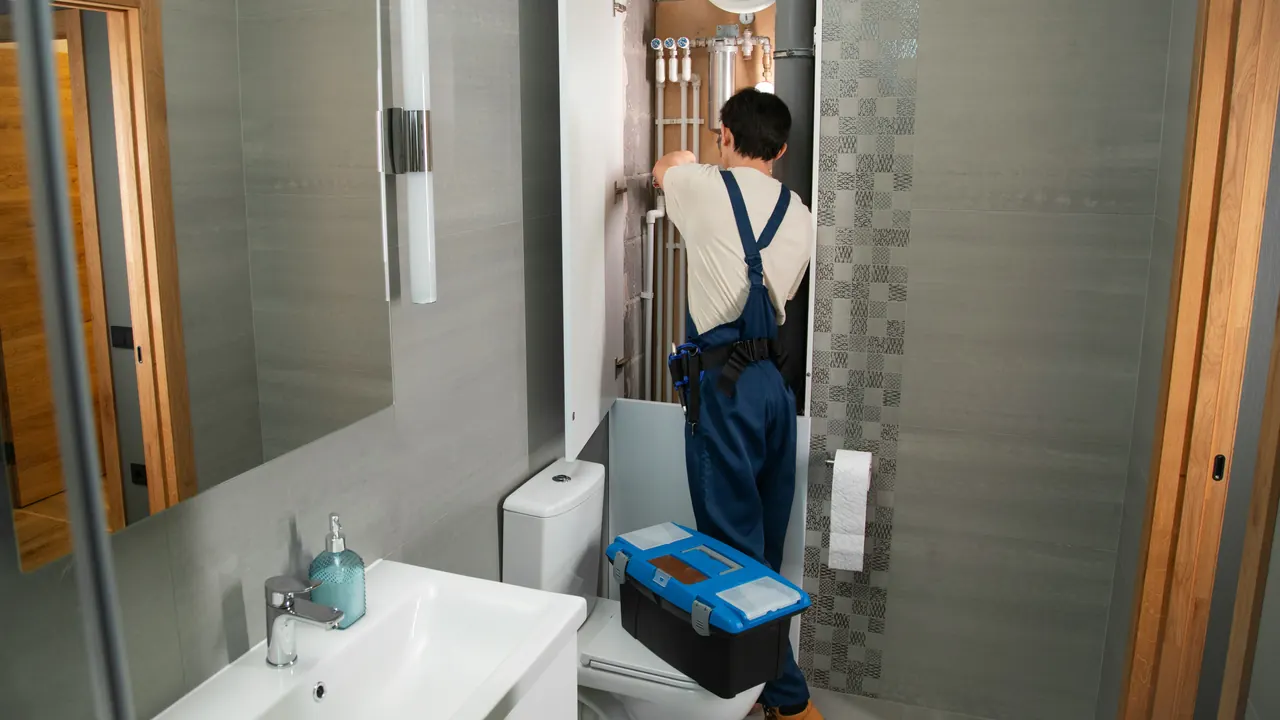
A drain that slows down in one fixture is usually a local clog in that fixture's trap or branch line. When several drains slow, gurgle, or back up together, especially the lowest ones in the house, the blockage is more likely in the main drain or sewer lateral. Common causes are grease, flushed or poured items that should not go down a drain, tree roots, and aging or damaged pipe. A camera inspection shows which one it is, and that determines whether snaking, hydro-jetting, or repair makes sense.
Common causes
Grease and food waste
Fats, oils, and grease cool and harden inside pipes. Miami-Dade County's guidance is to wipe pans before washing, put greasy sauces and fats in the trash, let cooking grease cool, and seal it in a container for the trash. It also says never to pour grease down a disposal, sink, or storm drain. A City of Sunny Isles Beach page notes that Miami-Dade Water and Sewer logged 604 stoppages costing $483,200 in fiscal year 2018 to 2019, from causes that included grease. That figure covers the public system, not a single home.
Items that do not break down
City of Minneapolis guidance lists sanitary napkins, bandages, coffee grounds, eggshells, kitty litter, and diapers as items that belong in the trash. Hair and soap build up in bathroom drains.
Tree roots
Roots follow moisture to cracks and loose joints. The City of Traverse City explains that warm water in a sewer pipe releases vapor into the cold soil, and roots grow toward it. Clay tile pipe installed until the late 1980s is especially vulnerable there, while PVC with fewer joints resists intrusion better. Warning signs from that source include gurgling from toilet bowls, wet areas around floor drains after laundry, and slow drainage. If nothing is done, roots can block the drain or crack the pipe.
South Florida homes often have mature trees, and older neighborhoods may have older pipe materials. Older pipe materials and joints give roots and debris more places to take hold.
Damaged or deteriorated pipe
Cracks, offsets, sagging sections (sometimes called bellies), and corrosion collect debris and let roots in. Cleaning will clear the symptom but will not fix a structural defect.
Fixture clog or main line?
Look at the pattern:
| What you notice | Likely location |
|---|---|
| One sink, tub, or toilet is slow | That fixture or its branch line |
| Several fixtures slow at once | Main drain or lateral |
| Toilet gurgles when the washer drains | Shared line, possibly the main |
| Water or sewage rises in the lowest drain, such as a floor drain or shower | Main line or lateral is blocked |
| Problem returns days after cleaning | Roots, damage, or a recurring blockage |
The City of Fairfield notes that if only one appliance backs up, the problem is most likely that appliance's drain, and that if water comes out of a low floor drain, the utility can check whether the public main is blocked. If the public side is clear, the problem is in the private lateral. In Miami-Dade, ownership and the cleanout location depend on the property; see sewer laterals and septic-to-sewer in Miami-Dade.
If you suspect a main line blockage, stop using water, since more water will make a backup worse. Keep children and pets away from sewage.
How a camera inspection works
A plumber feeds a small waterproof camera on a flexible cable through a cleanout or fixture opening. It shows the pipe's interior on a screen and often records video. A footage counter can help locate the problem. The City of Fairfield suggests considering a camera inspection after a blockage is cleared to find the cause and plan maintenance. EPA's technology description notes that closed-circuit TV is the most common way to inspect sewers, but that assessments depend on operator skill and the camera cannot see below the water line.
What to ask for:
- A recording you can keep.
- The location of any defect, measured from the cleanout.
- Pipe material and diameter.
- A written explanation of what was found.
Snaking versus hydro-jetting
| Feature | Snaking (mechanical) | Hydro-jetting (hydraulic) |
|---|---|---|
| How it works | A rod or cable with cutting blades breaks up the blockage | High-pressure water scours the pipe and flushes debris |
| Used for | Roots, grease, and debris | Deposited solids, grease, and some roots |
| Cautions | Loosened debris usually needs flushing out afterward | Too much water or a hose entering a service line can cause backups; weak pipe may not tolerate it |
EPA's municipal-sewer description says jetting is the most common hydraulic method because it is low cost, and that rodding uses cutting blades to break up roots, grease, and debris. Those descriptions concern public sewers rather than a house lateral, and equipment sizes differ. The NASSCO guideline for sewer-cleaning contracts says contractors should notify the owner in writing if they believe cleaning could damage or collapse a deteriorated pipe, and that cutting work should be monitored by camera. The same logic applies at home: ask whether the pipe is in condition for high pressure.
Neither method is a permanent fix for roots. Traverse City says that once roots are in a lateral, a blockage will likely recur, and recommends regular cleaning. The City of Fairfield notes that cutting roots addresses only the immediate stoppage; options include replacing the section, regular chemical root control, or regular mechanical cleaning. If the pipe is cracked or collapsed, cleaning is temporary and repair or replacement is the real question. See trenchless versus open-trench pipe repair for how those repairs differ.
When it is the main line
Treat it as a main line or lateral problem when several fixtures are affected, when sewage or water appears in a floor drain or low fixture, when cleaning only works briefly, or when the camera shows roots, offsets, or breaks. In that case:
- Stop using water.
- Call a licensed plumber who can inspect the line.
- Ask whether the problem is on your side of the property line.
- Get the findings in writing before approving a major repair or excavation.
Digging for a lateral repair puts the work near other underground utilities, so locating them first matters; see Florida 811 call-before-you-dig rules.
Questions people ask
Can chemical drain cleaners fix a sewer clog?
The sources reviewed for this article do not recommend them for sewer blockages. If several fixtures are backing up, a chemical will not tell you why, so a plumber's inspection is the better first step.
How often should a sewer line be cleaned?
There is no single schedule. A line with roots may need regular cleaning, as Traverse City advises, while a clear, intact pipe may need none. A camera inspection helps decide.
Is a slow drain an emergency?
A single slow drain usually is not. Sewage backing up into the house, or several fixtures failing at once, is more urgent, and you should stop using water and call a plumber.
Check before you decide
- Which fixtures are affected, and when it started.
- Where the cleanout is, and who owns each section of pipe.
- Camera findings, with video and distance markers.
- Whether the pipe can take high-pressure jetting.
- A plan for recurring roots or defects.
For diagnosis and repair, see plumbing services.